
How to Hang Blinds: Brackets, Fixings and Getting It Level
Installing blinds is a short job done in a set order. Mark the bracket positions, drill and plug the fixing points, screw the brackets level, clip the headrail in and test the mechanism. Choose fixings for the mounting surface and follow the fitting instructions that come with the blinds.
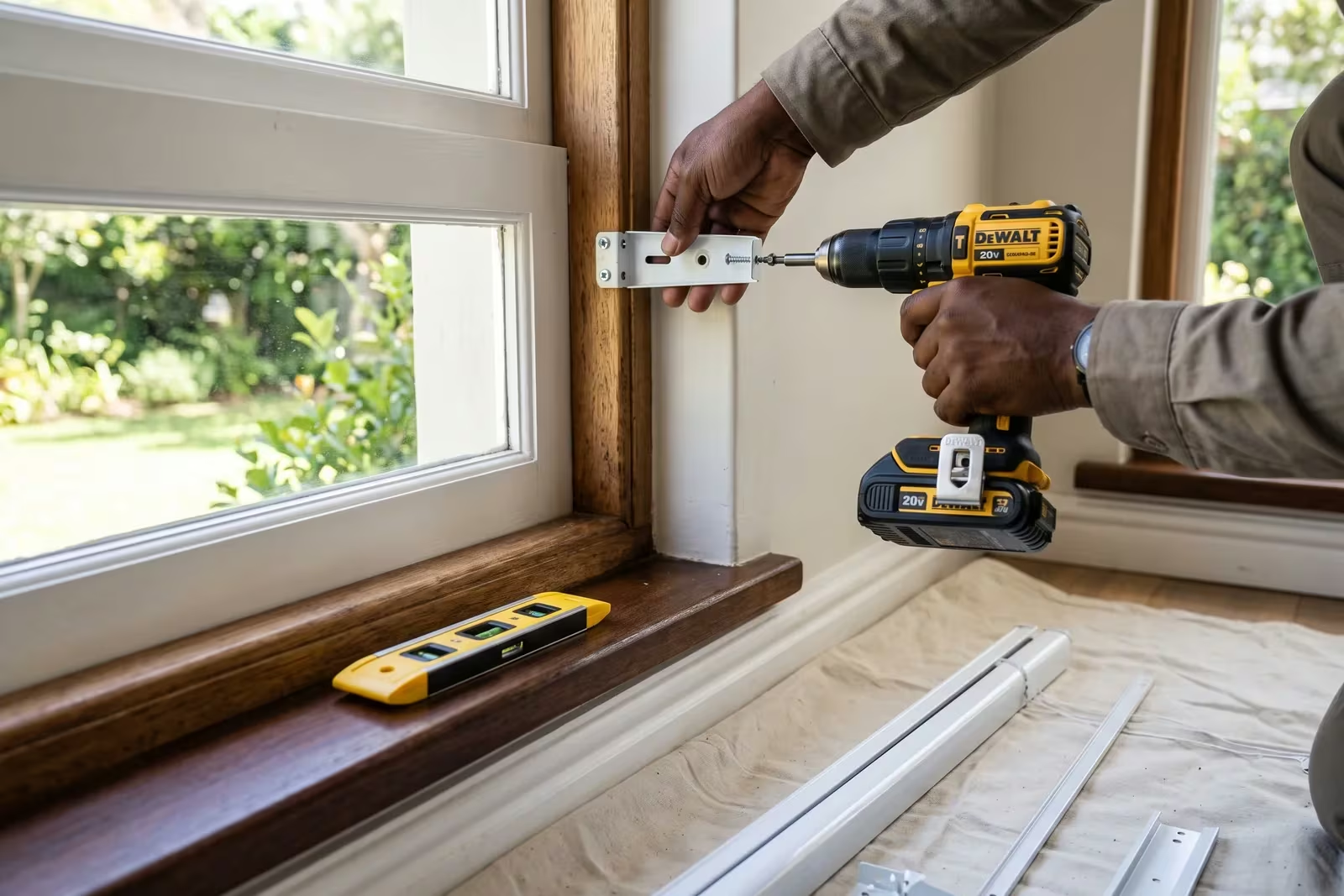
Mark the brackets before you drill anything
Offer the headrail up in position, check it with a spirit level and mark through the bracket holes. Brackets sit 50 to 75mm in from each end of the headrail. On a blind wider than about 1.5 metres, add a centre bracket, because the weight of a wide roller tube will otherwise pull the end brackets forward over time.
The installation procedure, one step at a time
Work through the installation procedure step by step, and finish each step before the next one starts. The step most often rushed is the level check.
- Check the parts: Lay out the headrail, the brackets, the screws and the wand or chain, and offer it up to the opening to confirm the width before drilling.
- Mark: Pencil each bracket through its screw holes while the rail sits in the desired position, at the mounting height you chose, and the spirit level reads true.
- Drill and plug: Drill to the depth of the plug and push the plug in flush. The fixing table further down matches the plug to the wall.
- Fix the brackets: Screw the mounting brackets on, then check them level against each other before anything clips in.
- Clip in the headrail: Push the headrail into the brackets until the catches close. Box brackets on Venetian headrails have a hinged front that swings shut over the rail.
- Test: Run the blinds fully down and up a few times after installation and watch that the fabric or slats travel straight.
Use the number and spacing of brackets the manufacturer specifies. Keep Venetian support brackets clear of the tilt mechanism, and on a roller use the end or cassette brackets its instructions call for. Check that the wall gives each bracket solid support before you load it. In a bay window, each pane takes its own blinds and its own pair of brackets, set level with the neighbouring pair.
Match the fixing to what is behind the wall
Brick and plaster take a 6mm plug and screw. Drywall needs a spring toggle or a screw into the stud; a plastic wall plug alone does not provide the same support. Aluminium and steel window frames use suitable self-tapping screws. Check the fixing surface and the manufacturer's fitting instructions before drilling.
Level the headrail before anything else
A roller blind mounted out of level can track toward one end of the tube and bunch the fabric. Use a spirit level across both brackets, and make that check its own step. Check the brackets against each other before using the window frame as a reference.
A level installation keeps a roller tracking straight. Where the frame itself is out of level, pack the low bracket with a thin spacer rather than following the line of the frame.
Rollers, verticals and Roman shades
Roller shades and Venetian blinds hang from a pair of end brackets with the headrail or tube clipped in between. Vertical blinds hang from a track screwed to the ceiling or the wall above the opening, with the vanes clipped on after the track is up. Vertical blinds on a long track take extra brackets along it, spaced as the track instructions show.
Roman shades usually hang from a headrail on brackets, with the folded fabric fixed to the front of it. Fix the top rail of any of these shades the same way: level brackets, the right plug and a firm screw. Bamboo shades hang the same way as Roman shades, from a rail on brackets. Light shades on a small window hang from two end brackets alone.
Burglar bars, aluminium frames and tiled reveals
Where burglar bars sit inside the recess and leave no depth for the brackets, fit the blinds on the wall above the frame as an outside mount, with each bracket clear of the bar fixings.
On aluminium window frames, the brackets screw straight into the frame with self-tapping screws and no plug. Keep the screws clear of the opening sash and its rubber seals, and pre-drill a pilot hole so the bit does not wander on the metal.
Tiled reveals in a bathroom or kitchen need a tile bit and slow drilling for the bracket holes, then a plug sized for the wall behind the tile. Installation of shades and Venetian blinds in those rooms follows the same bracket layout as anywhere else in the home.
No-drill options and a DIY guide for renters
No-drill blinds hang from tension or adhesive brackets inside the recess, so the walls of a rented flat stay unmarked. They work with light rollers and small openings.
This DIY guide covers blinds supplied for you to fit yourself. To install blinds on a bigger opening, or on a wall you are unsure about, book blinds installation with the order instead.
Where the brackets go depends on the mount. The measuring guide on how to measure for blinds explains inside and outside mounting, and outside mounting moves the brackets onto the wall above the frame. Check the mounting surface for pipes and cables before drilling.
| Behind the wall | Fixing | What fails without it |
|---|---|---|
| Brick or plaster | 6mm wall plug and screw | Screw strips out of soft plaster |
| Drywall / plasterboard | Spring toggle, or screw into the stud | Plug pulls straight out, blind drops |
| Aluminium window frame | Self-tapping screw, drilled directly | Plug has nothing to expand against |
| Timber reveal | Screw directly, no plug | Over-long screw splits the reveal |
| Concrete lintel | Masonry bit and sleeve anchor | Standard plug spins in the hole |
Products mentioned in this guide
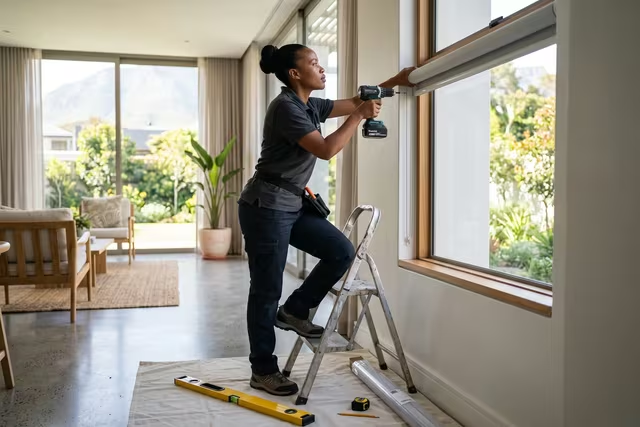
Blind Installers
A blind installer measures each window, has the blind manufactured to that exact size, then mounts the brackets, hangs the…
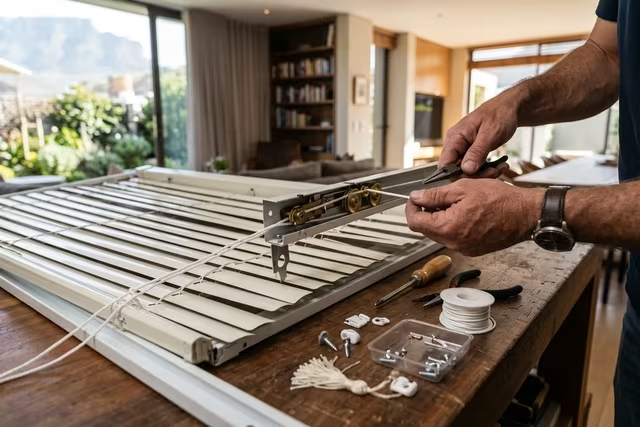
Blind Repairs
Blind repairs fix a jammed mechanism, a snapped cord or broken slats without replacing the whole blind.
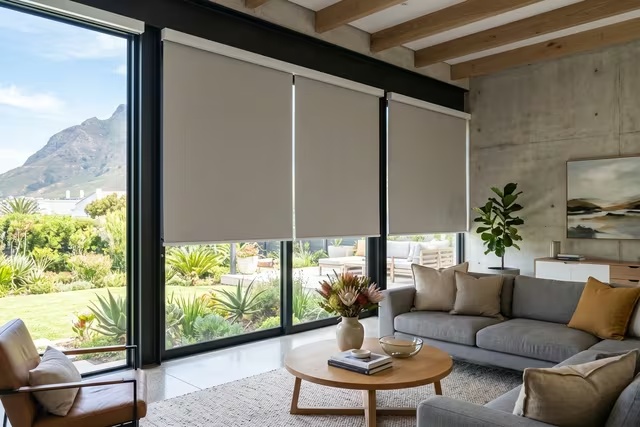
Roller Blinds
Roller blinds are a single panel of fabric that winds onto a tube above the window.
Request a quote
Send your details with the form, or message Capetown Blinds on WhatsApp.
Questions about hanging and fixings
How do you hang blinds without drilling?
Tension rods and adhesive brackets exist but hold only very light blinds, and adhesive fails in the heat of a north-facing window. For anything heavier than a small ready-made roller, drilling is the only reliable fixing. A rented flat is usually the case where no-drill options are worth it.
How high above the window should a blind be fitted?
For an outside mount, fit the headrail 50 to 100mm above the opening so the blind overlaps the top of the window and closes the light gap. For an inside mount the blind sits in the recess and the height is fixed by the reveal.
Do you need a centre bracket?
Yes, on wide blinds, as a centre support. The tube on a wide roller blind carries real weight when the fabric is wound, and two end brackets alone will flex over time.
Why won't my blind roll up straight?
A blind that tracks to one side is almost always mounted out of level, so the fabric climbs toward the low bracket a little more with each cycle. Take it down, level both brackets against each other, and re-hang.
Can you install blinds yourself?
Yes. Capetown Blinds can supply blinds for you to fit yourself, and a drill, a spirit level, a pencil and the right plugs for the wall cover the installation at home.