
Bedroom Blinds: Getting Real Darkness, Not Nearly Darkness
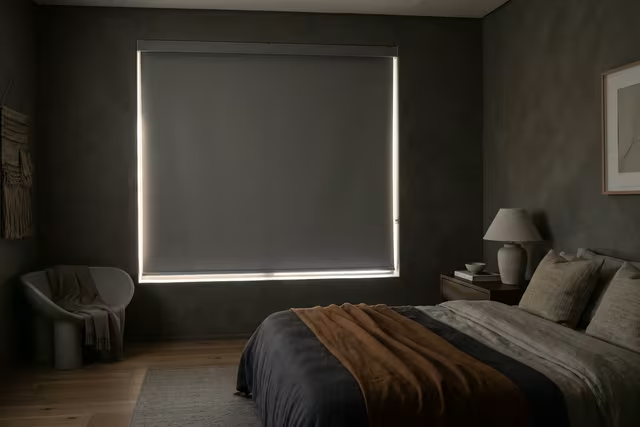
A bedroom blind is judged on one thing: whether the room is genuinely dark at 6am in December. Blockout fabric alone does not achieve that, because light comes around the edges of the blind rather than through it. Closing those gaps with side channels or an outside mount is what turns a dim room into a dark one.
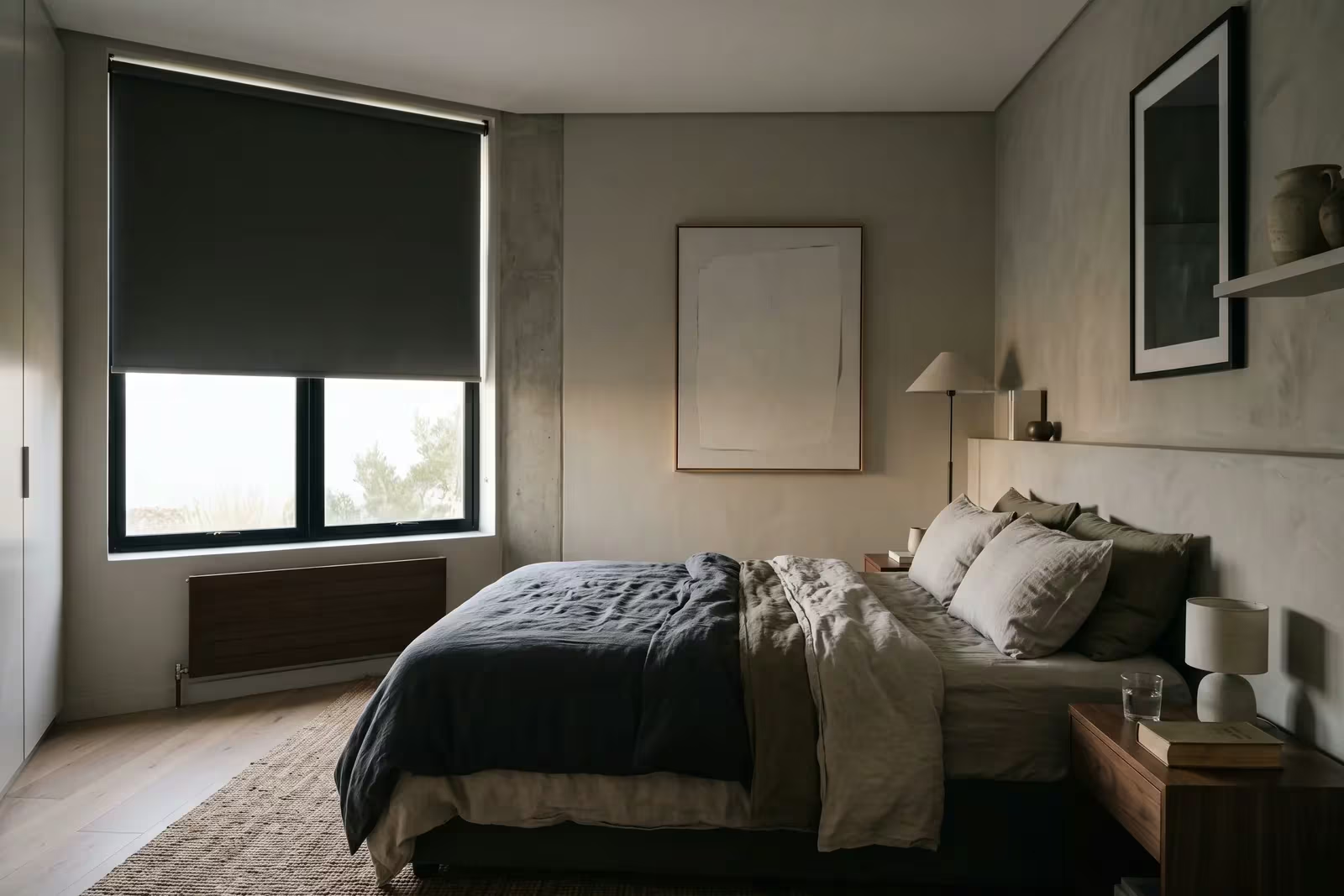
The fabric is rarely the problem — the edges are
People replace a blockout blind that is not dark enough with another blockout blind and get the same result, because the fabric was never the leak. A standard inside-mount blind sits a few millimetres clear of the reveal on each side so it can move freely, and in a bright east-facing room that gap is a bright line on the wall at sunrise. The fix is either an outside mount that overlaps the opening by 50 to 100mm each side, or aluminium side channels that the blind runs inside.
What a nursery needs that an adult bedroom does not
Daytime sleep is the difference. An adult bedroom needs to be dark for a few hours around dawn; a nursery needs to be dark at two in the afternoon, which is a much harder standard and almost always requires side channels and a pelmet. The second requirement is cords: a blind within reach of a cot must be cordless or motorised, with no loop of any length accessible.
Heat is the other half of a west-facing bedroom
A bedroom that faces the afternoon sun holds heat well past bedtime, and a blockout blind fitted inside the glass absorbs that heat and re-radiates it into the room. Where the room is genuinely hot rather than just bright, a light-coloured or reflective-backed fabric moves more heat back out through the glass than a dark blockout will.
| Set-up | Darkness achieved | Best for |
|---|---|---|
| Blockout roller, inside mount | Dim — light lines at both edges | Adult bedroom, night sleep only |
| Blockout roller, outside mount | Dark — edges overlapped 50–100mm | Most bedrooms |
| Blockout roller + side channels | Very dark — edges closed | Nurseries, shift workers |
| Blockout Roman blind | Dark — softer look, same fabric grade | Main bedrooms wanting a curtain look |
| Day-night blind | Dim at best | Bedrooms that double as a day room |
Blinds Mentioned in This Guide
Blackout Blinds
Blackout blinds are blinds made from an opaque, coated or tightly-woven fabric that stops light passing through, for…
Roller Blinds
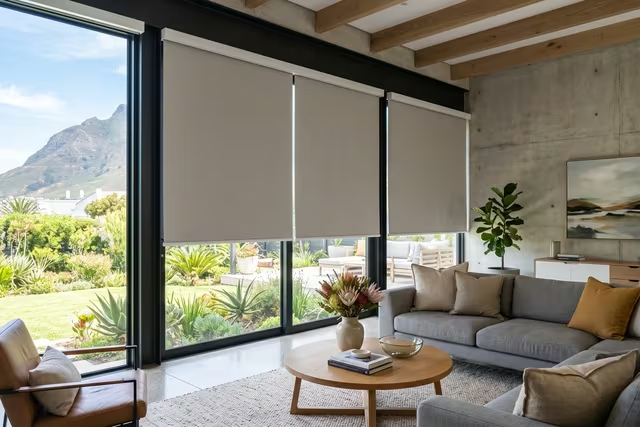
Roller blinds are a single panel of fabric that winds onto a tube above the window, giving clean, slat-free light control from…

Roman Blinds
Roman blinds are fabric blinds that draw up into smooth horizontal folds and stack tidily at the top of the window.
Get a free measure & quote
No charge, no obligation — anywhere in greater Cape Town.
Bedroom Blinds — FAQs
What blinds are best for a bedroom?
Blockout roller blinds are the usual answer, with blockout-lined Roman blinds where the room calls for something softer. Whichever fabric you choose, the darkness depends on closing the edge gaps with an outside mount or side channels rather than on the fabric alone.
Why is light coming in around my blackout blind?
Because an inside-mount blind has to sit slightly clear of the reveal to move freely, which leaves a few millimetres each side. That gap reads as a bright line at sunrise. An outside mount or aluminium side channels closes it.
What blinds are safest for a nursery?
Cordless or motorised, with no accessible loop of any length. Beyond safety, a nursery usually needs side channels and a pelmet, because daytime sleep is a much harder darkness standard than night-time sleep.
Do blackout blinds keep a bedroom cooler?
Partly. A blockout blind stops direct sun reaching the room, but a dark fabric inside the glass absorbs heat and re-radiates it. In a hot west-facing bedroom, a light-coloured or reflective-backed fabric keeps the room cooler than a dark one of the same blockout grade.