How to Measure Your Windows for Blinds
To measure for blinds, first choose an inside or outside mount, then measure the width and drop of the window in three places and use the smallest width for an inside fit. Accurate measurements are what let a made-to-measure blind fit with no light gaps. This guide walks through it step by step, though Capetown Blinds also offers a free in-home measure across Cape Town so you never risk a costly mistake.
Inside mount vs outside mount
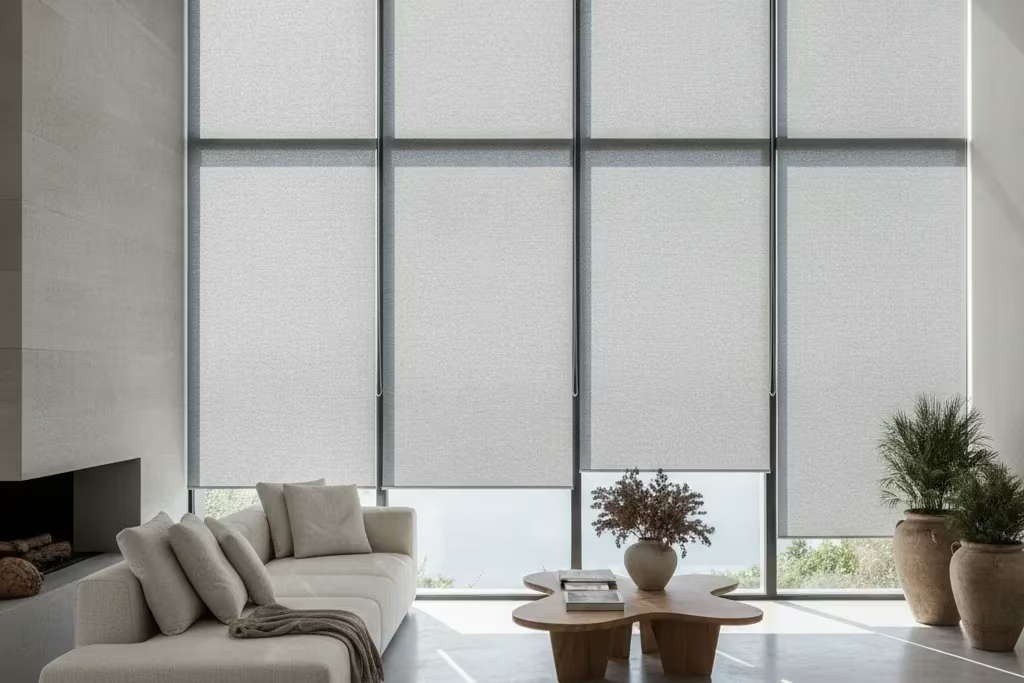
An inside-mount blind sits inside the window recess for a neat, built-in look, while an outside-mount blind fixes to the wall above and beyond the opening to block more light and make a window look larger. Choose inside mount where the recess is deep enough, and outside mount for shallow recesses or maximum darkness.
Measuring the width and drop
Measure the width in three places — top, middle and bottom — because few windows are perfectly square. For an inside mount, use the smallest width and let the manufacturer deduct the fitting tolerance. For the drop, measure from the top of the recess to the sill in three places and use the longest. Always write width first, then drop.
Common measuring mistakes
The most common mistakes are measuring only once, adding your own deductions, and forgetting handles or tiles that the blind must clear. A made-to-measure blind is cut to the millimetre, so a small error shows. When a window is out of square, large or high up, a free professional measure removes the risk.
Measuring for a blind that already exists
Replacing a blind is not the same job as measuring a bare window. The old blind was cut to fit itsbrackets rather than the opening, so copying its width repeats whatever error was made the first time.Measure the recess itself and treat the existing blind as a reference for style only. Where the bracketsare being reused, note the bracket type and the centre-to-centre spacing as well, because a differentheadrail will not always sit in them.
| Inside mount | Outside mount | |
|---|---|---|
| Where it sits | Inside the window recess | On the wall or frame above the recess |
| Width to use | The narrowest of three measurements | Recess width plus 50–75mm each side |
| Drop to use | Recess height, top to sill | Recess height plus 50–100mm overlap |
| Light gaps | Small gaps at the edges | Minimal — the blind overlaps the opening |
| Best for | Deep, square recesses and a built-in look | Shallow or uneven recesses, and blackout |
Blinds Mentioned in This Guide
Roller Blinds
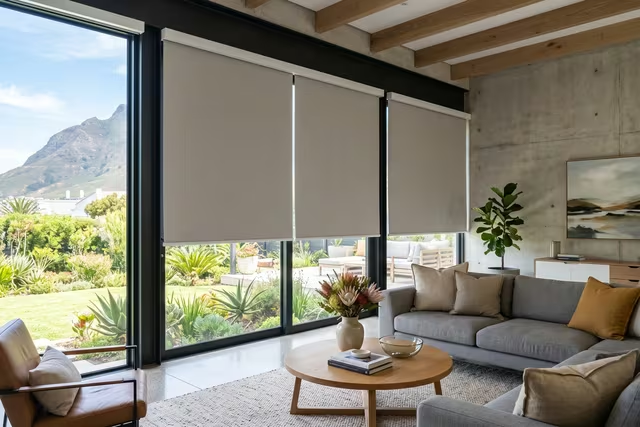
Roller blinds are a single panel of fabric that winds onto a tube above the window, giving clean, slat-free light control from…
Venetian Blinds
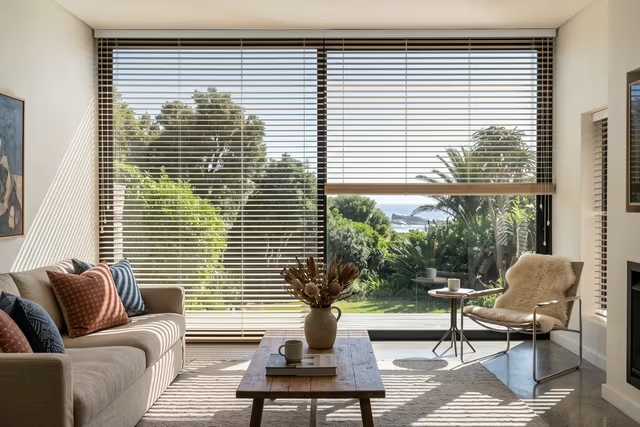
Venetian blinds are horizontal slats on cords that tilt to control light and privacy, and lift to stack clear of the window.
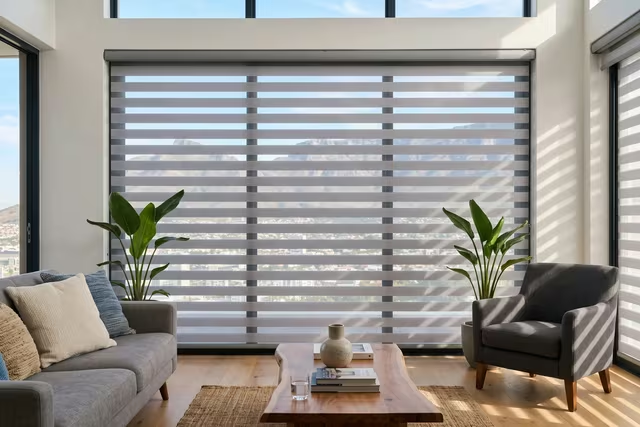
Day-Night Blinds
Day-night blinds are dual-layer roller blinds with alternating sheer and solid fabric bands that align to either filter or…
Get a free measure & quote
No charge, no obligation — anywhere in greater Cape Town.
How to Measure for Blinds — FAQs
Should I measure inside or outside the recess?
Measure for an inside mount when the recess is deep enough to hold the headrail, and for an outside mount when the recess is shallow, uneven or you want to block the most light. Each uses different measurements, so decide the mount first.
Do I deduct anything from my measurements?
No. Give the exact opening sizes and the manufacturer makes the deductions for the fitting tolerance. Adding your own deductions is the most common reason a blind ends up too small.
Can Capetown Blinds measure for me?
Yes. Capetown Blinds offers a free, no-obligation in-home measure across the greater Cape Town area, so your blinds are cut to the exact size with no risk of a measuring error.
What tape measure should I use?
Use a steel tape, not a fabric one. Fabric tapes stretch by several millimetres over a two-metre drop,and on an inside-mount blind that error is the difference between a blind that fits and one that bindsagainst the reveal.