
Office and Commercial Blinds: Glare, Uniformity and Wear
An office blind is specified for screen glare and for how the building looks from the street, not for decoration. Sunscreen fabric in a low openness figure is the standard answer because it cuts glare at the desk while keeping the floor bright, and a uniform backing colour keeps every window of the building reading the same from outside.
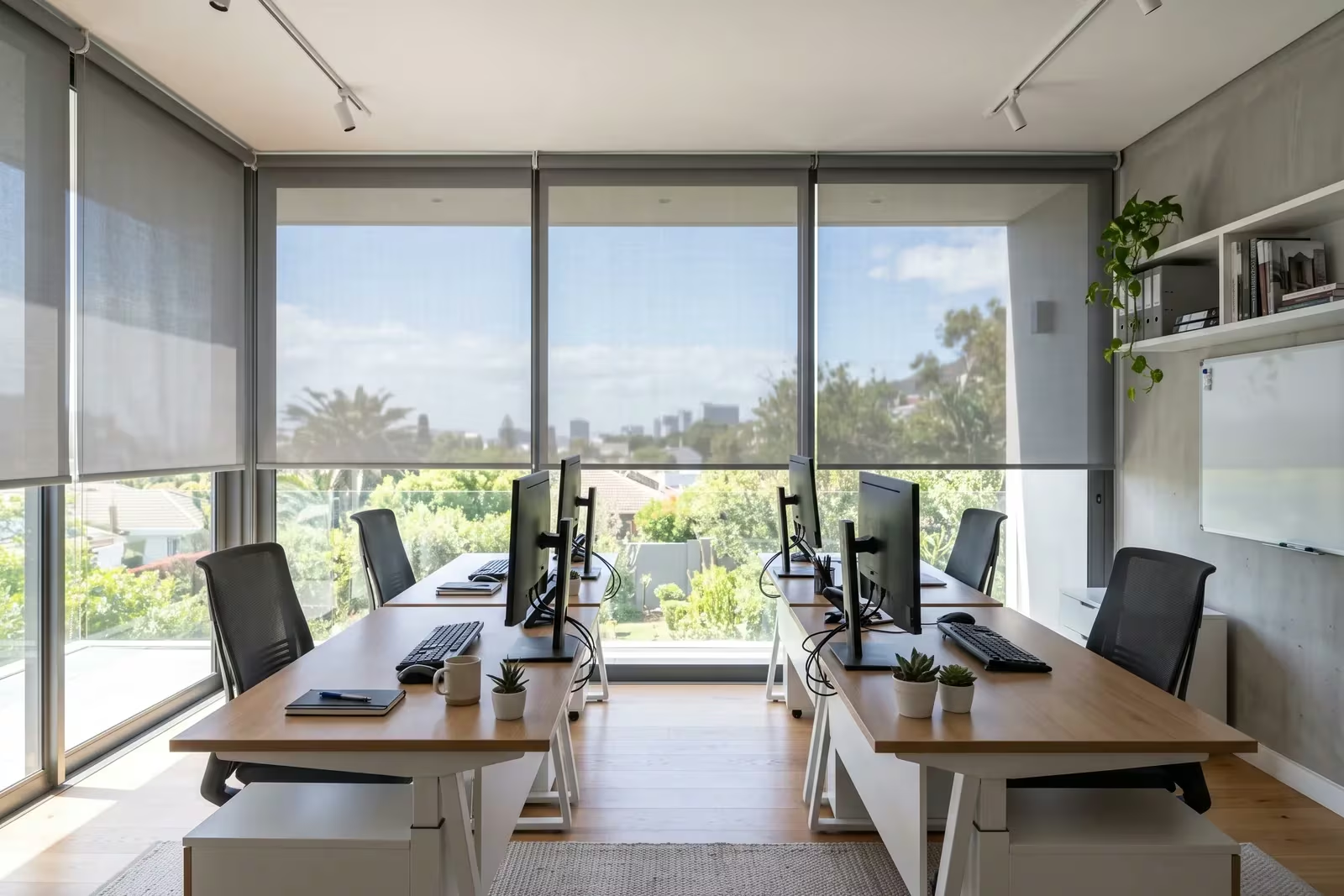
Glare at the desk, not darkness on the floor
Darkening an office to fix glare trades one complaint for another, because staff away from the window then work under artificial light all day. Sunscreen fabric at 3 to 5 percent openness cuts the brightness of the window itself while letting daylight through to the middle of the floor. The openness figure, not the colour, is what does the work.
The building has to look the same from outside
Most commercial leases and body corporate rules specify what the street sees, and a floor where every tenant chose their own blind reads as neglected. The usual solution is a fixed neutral backing — white or charcoal — on every street-facing blind, with the room-side colour left to each tenant. That satisfies the rule without dictating the interior.
Commercial wear is not domestic wear
An office blind is operated by whoever is nearest, several times a day, by people who did not pay for it. Chains and clutches fail far sooner than in a home, which is why commercial specification leans toward heavier mechanisms, or motorisation with a wall switch on banks of windows so no individual blind is being hauled on at all.
| Requirement | Specification | Note |
|---|---|---|
| Screen glare at the desk | Sunscreen, 3–5% openness | Openness does the work, not colour |
| Daylight to the middle of the floor | Sunscreen, not blockout | Blockout trades one complaint for another |
| Uniform look from the street | Fixed white or charcoal backing | Room-side colour stays free |
| Floor-to-ceiling glazing | Vertical blinds | Carries load along the whole track |
| Banks of shared windows | Motorised, wall switch | Removes the wear that kills chains |
| High-traffic tenancy | Heavier clutch mechanism | Commercial wear is not domestic wear |
Blinds Mentioned in This Guide
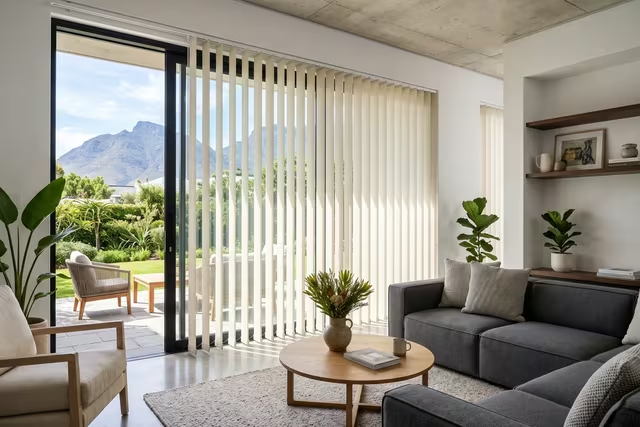
Vertical Blinds
Vertical blinds are fabric vanes that hang from a top track, draw aside for a full opening, and rotate to fine-tune light and…
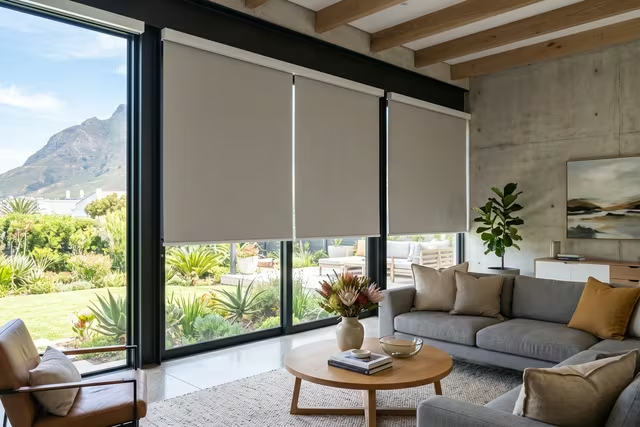
Roller Blinds
Roller blinds are a single panel of fabric that winds onto a tube above the window, giving clean, slat-free light control from…
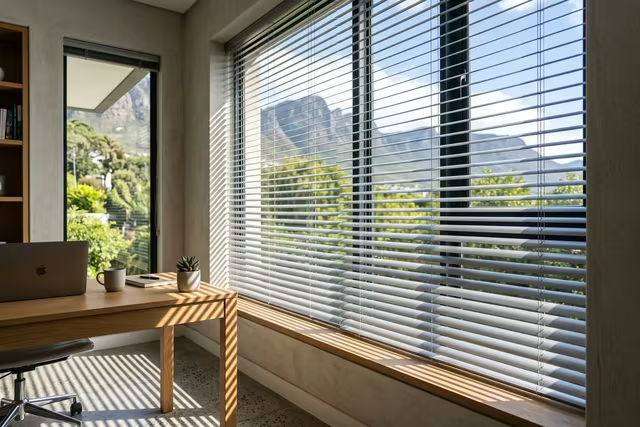
Aluminium Blinds
Aluminium blinds are slim 25mm metal Venetian slats with a tidy tilt-and-lift action and a powder-coated finish that shrugs…
Get a free measure & quote
No charge, no obligation — anywhere in greater Cape Town.
Office Blinds — FAQs
What blinds are best for an office?
Sunscreen roller blinds at 3 to 5 percent openness for most window walls, and vertical blinds where the glazing runs floor to ceiling or the window is very wide. Both cut glare at the desk without leaving the middle of the floor dependent on artificial light.
How do you stop screen glare in an office?
Fit a low-openness sunscreen fabric rather than a darker blind. Glare comes from the brightness of the window relative to the screen, so reducing the window's intensity solves it while keeping the space bright and usable.
Do commercial blinds need to match across a building?
Usually the street-facing side does. Most leases and body corporate rules specify a uniform external appearance, which is normally met with a fixed neutral backing colour while the room-side finish stays up to the tenant.
Are motorised blinds worth it in an office?
On banks of windows, yes. Shared blinds are operated constantly by people with no stake in them, and chain mechanisms fail early as a result. A wall switch controlling a bank of blinds removes the wear and means the blinds actually get used correctly.