
How to Clean Blinds Without Wrecking Them
Most blinds need dusting every few weeks and a proper wash once or twice a year, and the method changes entirely with the material. Aluminium and faux-wood can be washed with warm soapy water; real timber and most fabrics cannot, and treating them the same way is how slats warp and roller fabric marks permanently.
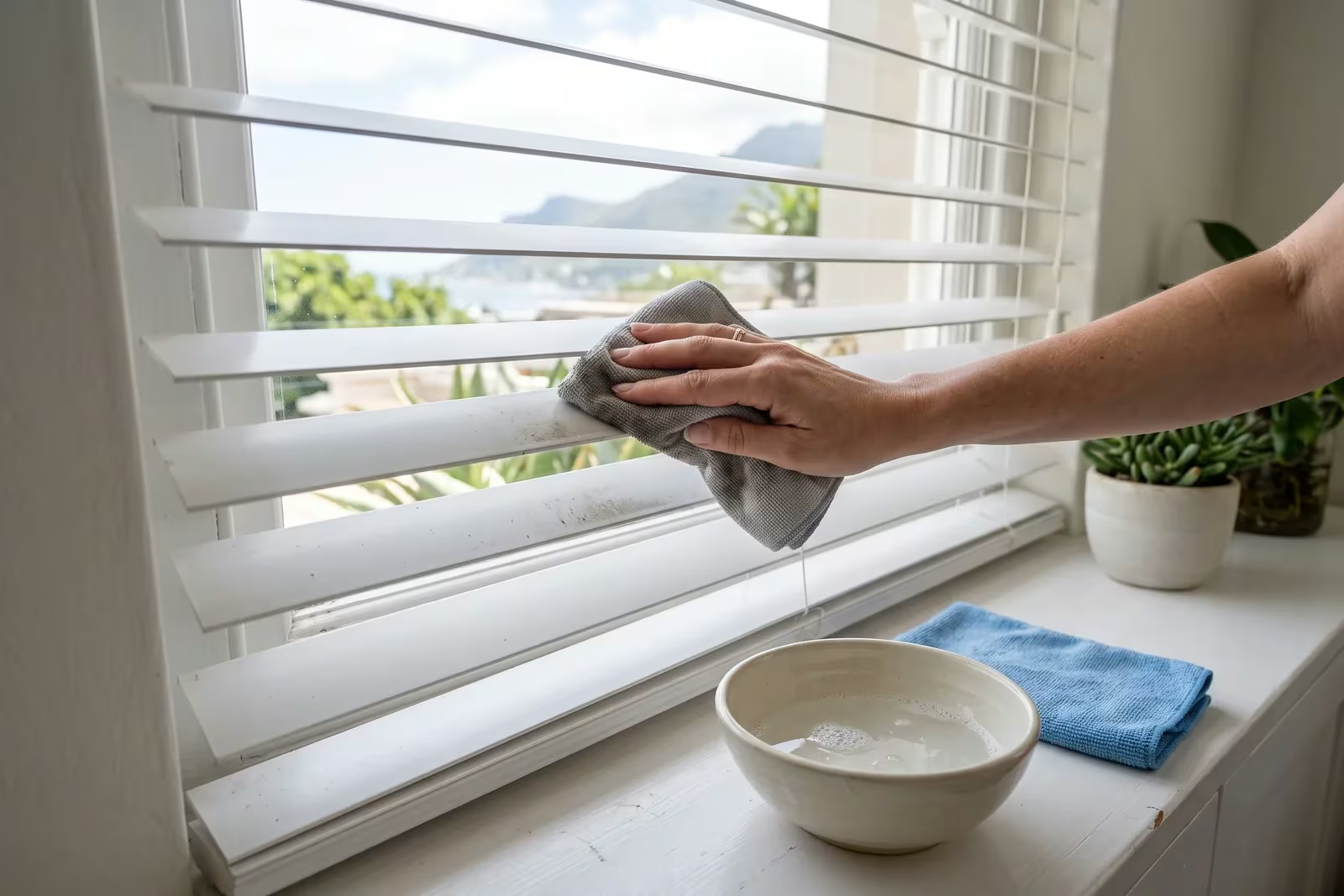
Dust along the slat, never across it
Wiping across a stack of slats pushes dust into the ladder strings and pulls the slats out of alignment, and on a Venetian blind that misalignment is what stops them closing flat afterwards. Tilt the slats closed, wipe the whole face in long horizontal passes, then tilt the other way and do the reverse face. A microfibre cloth holds dust; a feather duster moves it onto the sill.
Water is fine on aluminium and faux-wood, and nowhere else
Aluminium slats and PVC or composite faux-wood can be taken down and washed in warm water with a little dishwashing liquid, then dried before re-hanging. Real timber must never be soaked: water raises the grain and swells the slat, and the damage is not reversible. Timber is cleaned with a barely-damp cloth and dried immediately.
Fabric roller blinds mark rather than clean
A blockout roller blind has a coating on the back that will lift if it is scrubbed, and most sunscreen fabrics show a water ring where a wet cloth stopped. Spot-clean gently with a barely damp cloth working outward from the mark, and accept that a heavily soiled roller blind is usually a re-fabric job rather than a cleaning job.
| Material | Routine dusting | Deep clean | Never |
|---|---|---|---|
| Aluminium | Microfibre along the slat | Warm soapy water, dry before re-hanging | Abrasive pads — they strip the coating |
| Faux-wood | Microfibre along the slat | Warm soapy water | Solvent cleaners |
| Real timber | Dry or barely-damp cloth | Barely-damp cloth, dried at once | Soaking — the slats swell permanently |
| Fabric roller | Vacuum on low with a brush head | Spot-clean outward from the mark | Scrubbing — it lifts the blockout backing |
| Vertical vanes | Wipe along the vane | PVC in soapy water; fabric spot-clean only | Machine washing fabric vanes |
Blinds Mentioned in This Guide
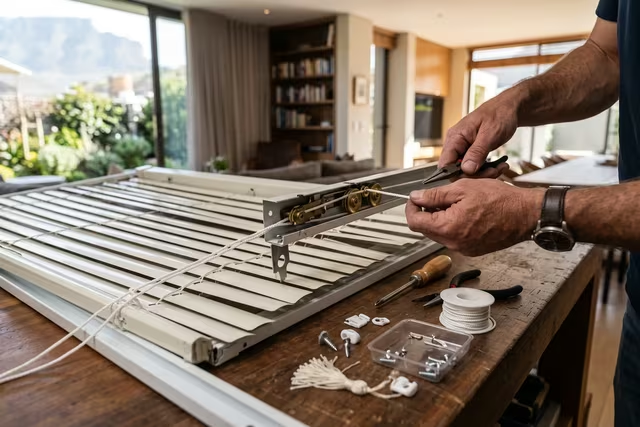
Blind Repairs
Blind repairs fix a jammed mechanism, a snapped cord or broken slats, so you avoid the cost of a whole new blind.
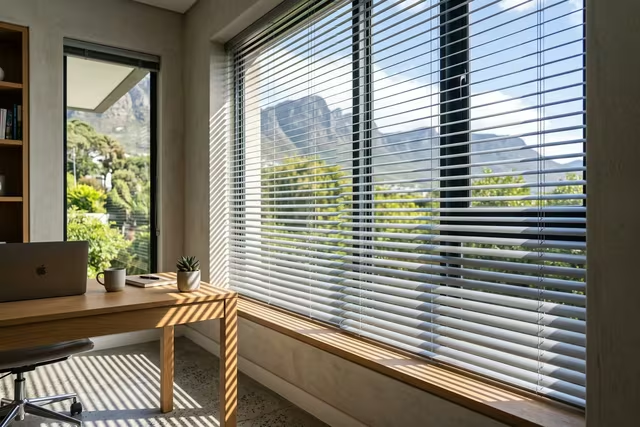
Aluminium Blinds
Aluminium blinds are slim 25mm metal Venetian slats with a tidy tilt-and-lift action and a powder-coated finish that shrugs…

Venetian Blinds
Venetian blinds are horizontal slats on cords that tilt to control light and privacy, and lift to stack clear of the window.
Get a free measure & quote
No charge, no obligation — anywhere in greater Cape Town.
How to Clean Blinds — FAQs
How often should blinds be cleaned?
Dust every two to four weeks and wash once or twice a year for most rooms. Kitchens need it more often because grease accumulates, and a coastal home collects salt film on the slats faster than an inland one.
Can you wash blinds in the bath?
Aluminium and faux-wood slats can be washed in a bath of warm soapy water and dried flat before re-hanging. Never do this with real timber blinds or with any fabric blind, both of which are damaged by soaking rather than cleaned by it.
How do you clean fabric roller blinds?
Spot-clean with a barely damp cloth, working outward from the mark so the edge of the damp area does not dry as a ring. Scrubbing lifts the blockout coating on the back of the fabric. Heavily marked roller blinds are usually re-fabricated rather than cleaned.
How do you clean vertical blind vanes?
Unclip the vanes, lay them flat and wipe each one along its length with a damp cloth. PVC vanes tolerate soapy water; fabric vanes should only be spot-cleaned. Re-clip them the same way round, because the weights and chain sit at the bottom.