
Blinds for Sliding and Stacker Doors: Clearing the Opening
Blinds for sliding doors have to clear the opening completely, because a door you walk through twenty times a day cannot have a blind hanging in the way. Vertical blinds draw fully to one side and stack in roughly 150 to 250mm, which is why they remain the standard answer for a wide opening. The stack-back space is the measurement that decides the whole job.
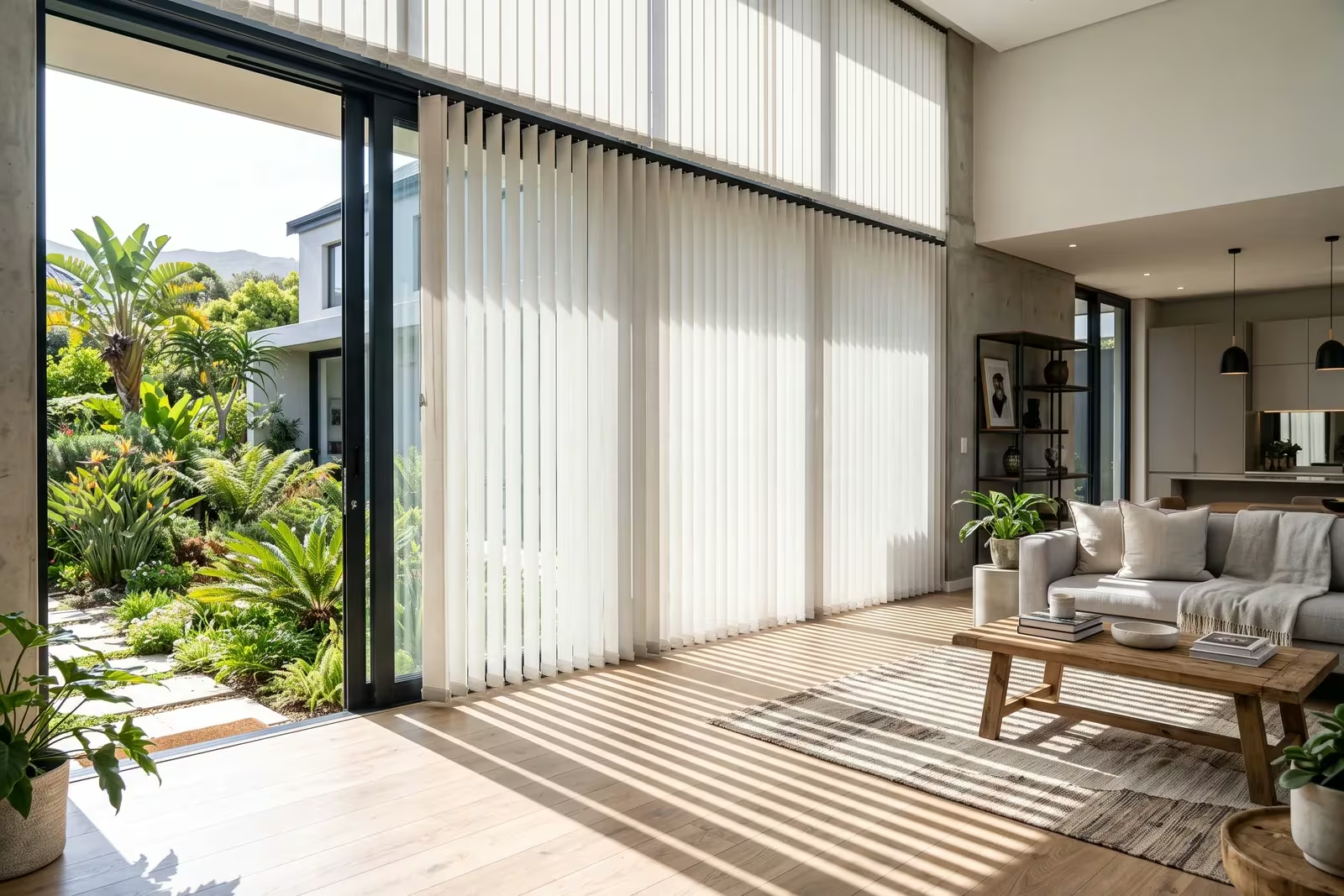
Stack-back is the measurement that matters
Every blind that opens sideways needs somewhere to sit when it is open, and on a sliding door that space is usually wall you do not have. Vertical vanes stack tighter than any fabric alternative, but they still need clearance, and stacking them over the glass defeats the point of the door. Where there is no wall to either side, a top-fixed blind that lifts rather than draws aside is the only option that keeps the full opening usable.
Traffic through the opening changes the specification
A door onto a braai area gets used constantly in summer, and a blind that has to be moved by hand every time gets left open permanently. That is a specification failure rather than a habit problem. On a high-traffic opening, either motorise it so the blind moves on a switch, or accept vertical vanes that can be pushed through without damage and rotated back afterwards.
Wide openings are a weight problem, not a fabric problem
A three-metre roller blind carries real weight on its tube, and the wider it gets the more the tube deflects in the middle, which makes the fabric track unevenly. Past roughly 2.4 metres the right answer is usually two linked blinds on a shared bracket rather than one wide one, or a vertical track that carries its load along its whole length instead of at two end points.
| Option | Stack-back needed | Suits | Watch out for |
|---|---|---|---|
| Vertical blinds | 150–250mm | Wide openings, daily traffic | Needs wall to stack onto |
| Wide roller blind | None (lifts) | Head height available, lighter use | Tube deflects past ~2.4m |
| Two linked rollers | None (lifts) | Very wide openings | Small visible join at centre |
| Motorised vertical | 150–250mm | High-traffic patio doors | Power supply needed at the head |
| Outdoor blind (exterior) | None (lifts) | Blocking wind and sun outside | Weather-rated fixings essential |
Blinds Mentioned in This Guide
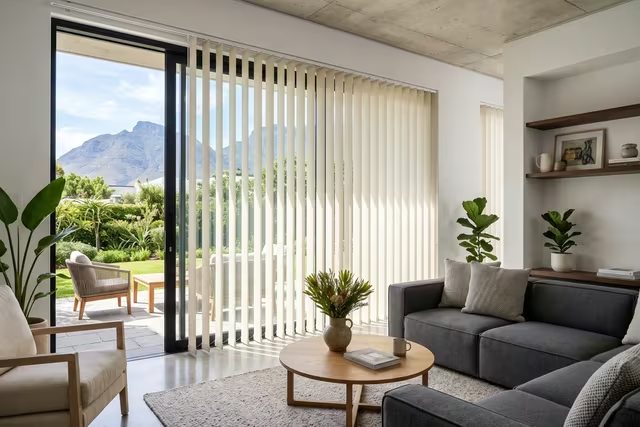
Vertical Blinds
Vertical blinds are fabric vanes that hang from a top track, draw aside for a full opening, and rotate to fine-tune light and…
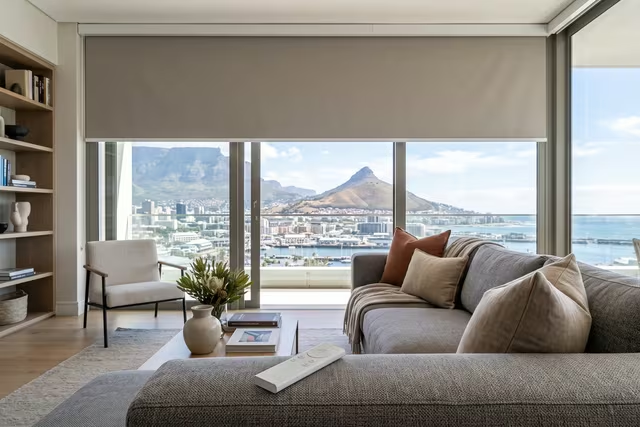
Motorised Blinds
Motorised blinds are blinds driven by a tubular motor inside the roller tube or headrail, operated by remote, wall switch or…
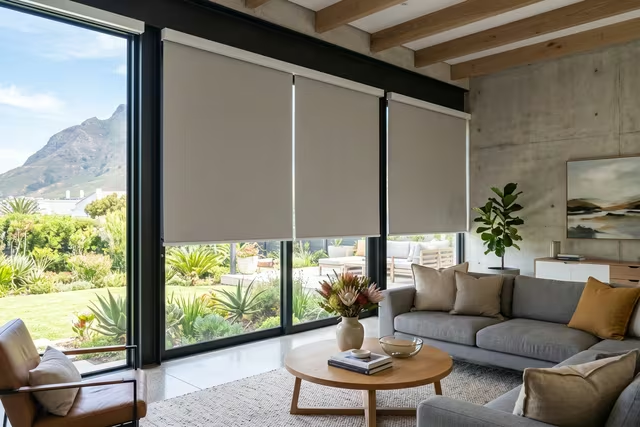
Roller Blinds
Roller blinds are a single panel of fabric that winds onto a tube above the window, giving clean, slat-free light control from…
Get a free measure & quote
No charge, no obligation — anywhere in greater Cape Town.
Blinds for Sliding Doors — FAQs
What blinds are best for sliding doors?
Vertical blinds are the standard answer because the vanes draw fully aside and stack in about 150 to 250mm, leaving the opening clear. Wide roller blinds work where there is head height and the door is used less often, and motorisation is worth it on any opening used daily.
How much space do vertical blinds need to stack?
Allow roughly 150 to 250mm of stack-back depending on the width of the blind and the number of vanes. That space needs to be wall rather than glass, otherwise the open blind covers part of the door you are trying to walk through.
Can you fit blinds to a stacker door?
Yes. A stacker door is measured as one wide opening and usually takes a vertical track or two linked roller blinds. The important detail is which side the door stacks to, because the blind should stack the same way rather than fighting it.
Are motorised blinds worth it on a patio door?
On a door used every day, yes. The blind that is awkward to move is the blind that stays open, so the light control you paid for never happens. A motor on a wall switch or remote removes that friction entirely.